

OSCON 2026 Speakers
Jump to:
Keynote Speakers

Dr. Frank Nagle
Research Scientist at the Initiative on the Digital Economy at the Massachusetts Institute of Technology (MIT) and Chief Economist at The Linux Foundation. Dr. Nagle's research has illuminated the real economic impact of open source software on organizations, industries, and broader society.

Mariatta Wijaya
Python Core Developer with a primary focus on improving core Python workflow, documentation, and community accessibility. She is advisor and administrator for Global PyLadies, an international mentorship group helping those who identify as women become active participants and leaders in the Python community, and kickstarted the PyCascades and PyLadiesCon conferences.

Dr. Lorena A. Barba
Lorena A. Barba is professor of mechanical and aerospace engineering at the George Washington University. Her research interests include computational fluid dynamics, high-performance computing, and computational biophysics. An international leader in computational science and engineering, she is also a long-standing advocate of open source software for science and education, and is well known for her courses and open educational resources.
Featured Speakers

Brandon Tabaska
Brandon Tabaska is an Open Source Developer Evangelist at Nava, where he works on the simpler.grants.gov project, helping connect developers to open source opportunities and fostering a growing contributor community. Prior to that, Brandon contributed to the Massachusetts Paid Family and Medical Leave project, improving accessibility and streamlining benefits delivery. Before joining Nava, he worked at NASA Ames Research Center on the Mission Assurance Systems project, focusing on enhancing software reliability for critical missions. Outside of work, Brandon enjoys gardening and diving into a good book.

John Lach
John Lach was named interim provost of the George Washington University effective July 1, 2025. Most recently, he served as dean of GW’s School of Engineering and Applied Science, a role he began in August 2019. Throughout his career, Interim Provost Lach has worked extensively with departments, schools, and initiatives to foster cross-disciplinary collaboration that supports strategic priorities. As a researcher, he focuses on wireless technologies in health. His primary research interests are cyber-physical systems, embedded sensor systems, smart and connected health, and body sensor networks.
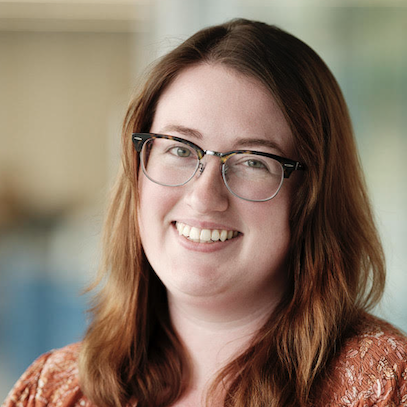
Meredith Roach
Meredith Roach is part of the Memberships team at The Linux Foundation, supporting the PyTorch Foundation and Jupyter Foundation. Before joining the foundation, she worked as a technical trainer and instructional designer for a variety of SaaS organizations. She holds a B.A. in Organizational Development from Temple University, and when not at work, you can likely find her hiking and fishing in the mountains with her family.
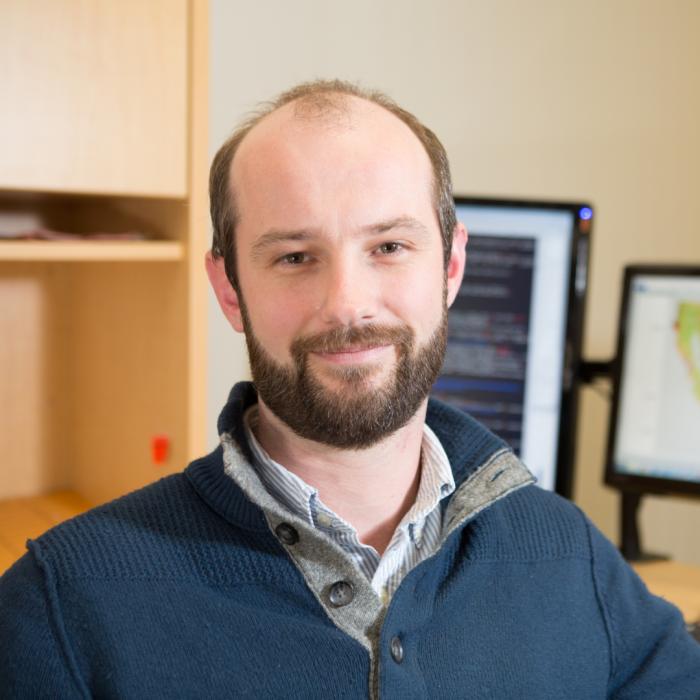
Michael Mann
Dr. Michael L. Mann is a leading expert in remote sensing, machine learning, and geospatial analysis, with a strong academic and research background in geography and environmental studies. He currently serves as an Associate Professor at George Washington University, where he also leads the graduate program in the Department of Geography & Environment. His research focuses on the intersection of environmental policy, land-use change, and technological applications for sustainable development, particularly in the Global South.

Barrett Matthews
Barrett has been with GW University for almost 10 years, working on compliance issues related to distance education, serving on the Gelman Library Scholarly Communications team, and helping to manage their copyright policies and education. Prior to GW, Barrett lived and worked in Japan. He graduated from Wake Forest University School of Law. In his free time, he's an enthusiastic consumer of fantasy media.

Rachit Rahul Das
Rachit Das is a graduate Computer Science student at The George Washington University specializing in Machine Intelligence and Cognition. He previously worked as an AI Engineer at SolvusAI, where he built intelligent systems for large-scale information retrieval, automated analysis, and reliable evaluation of AI-generated outputs. He is currently working on a system that detects and prevents previously unseen cyberattacks by identifying anomalous network behavior, as well as an AI based search engine that uses Small language models, helping users discover relevant products through natural language and images.

Dolsy Smith
Dolsy has worked at GW in a variety of roles since 2005. Currently, he builds and maintains open-source software as part of LAI's Scholarly Technology Group, and he supports users' access to and discovery of library resources through his work with Alma and Primo. He also teaches workshops and offers consultations on computational topics.

Emily Blumenthal
As a Data Services Librarian, Emily is committed to FAIR data practices, with a strong focus on data accessibility, preservation, and open source/open access. Her goal is to help researchers effectively manage, analyze, and share data in ways that enhance its usability and long-term impact.

Dalton Alves
Dalton Alves is a librarian and archivist interested in technology and the open movement. He serves as the Digital Services Manager for GW Libraries and Academic Innovation. With experience in libraries, museums, and archives, his work focuses on making cultural heritage collections more open and accessible to all.

LJ Johnson
LJ Johnson (he/they) is the business and data services librarian working with the Research and User Services librarians. They support library instruction in University Writing courses, conduct research assistance appointments with GW community members, and participate in online reference efforts.

Alex Boyd
Alex Boyd is a software developer with the George Washington University’s Libraries and Academic Innovation team, where they assist students and faculty with incorporating software and coding in their research projects, teach introductory coding workshops, and support the development of repository and archival software. In addition, Alex is currently pursuing an MS degree in Geography and Environment at the George Washington University.

Daniel Kerchner
Dan Kerchner is a Senior Software Developer with GWLAI and collaborates with colleagues on projects including GW's institutional repository. Dan teaches workshops on R, Python, data visualization, and more, and also shares his insight through consultations to help GW students, faculty, and researchers succeed in their coding, data analysis and visualization projects. Dan is also a PhD student in Health Data Science, Bioinformatics in the Milken School of Public Health, and, as an adjunct instructor, co-created and taught Introduction to R Programming in Public Health and Biomedical Research. Dan is a certified PMP and a certified and active Carpentries instructor.
Regular Session Presenters

Pingfan Hu
Pingfan Hu is a PhD candidate in Engineering Management & Systems Engineering at George Washington University, advised by Professor John Helveston. His work focuses on R development and data science in sustainable transportation. He builds websites and interactive applications with Quarto and Shiny, and also writes moderate Python, HTML, and CSS.

Pedro Vicente
Software Engineer with 15+ years developing mission-critical applications for government and scientific institutions. Specializes in designing high-performance data-centric network applications with database backends serving NOAA, NASA, and federal agencies. Expert in HDF5 data formats, network development, data visualization using C++ libraries, and cross-platform solutions. Active contributor to open source projects available on GitHub. View some of my open source projects.

Philip Yamoah Appiah
Philip Yamoah Appiah is a Graduate Research Assistant at the FIT Gut Lab and an MS Health Data Science (Bioinformatics) student at The George Washington University. His work focuses on metagenomic analysis and open-source tools, including CanisLupus2.0, an R Shiny application for microbiome data analysis. Philip has experience in large-scale data systems through roles with Project HOPE and the Ghana Statistical Service and is committed to leveraging data science for global health equity

Gabriel Toscano
Gabriel Toscano is a Master of Public Policy student at Duke University interested in building and governing digital technologies in the public interest. With a background in philosophy and software development, he focuses on open source and AI governance, technology policy, and linking policy design with engineering practices. His sociotechnical work on AI has been featured in the MIT Science Policy Review and at Stanford’s Trust & Safety Conference.
In collaboration with the Open Source Initiative (OSI), his current research analyzes how open source principles impact AI development and assesses the policy landscape surrounding open source AI models.

Ray Bell
Dr. Ray Bell serves as the Director of AI/ML Product for the Maryland Department of Information Technology. In this role, he leads the state's initiatives to integrate artificial intelligence and machine learning into government services.
A seasoned data scientist with a PhD, Dr. Bell previously worked at DTN and Royal Caribbean, where he focused on complex projects such as power outage prediction and enterprise AI. His expertise spans data science, product management, and technical leadership.

Daniel Schuman
Daniel Schuman is the founder and Executive Director of the American Governance Institute, a nonprofit dedicated to strengthening U.S. democratic institutions. He is a nationally recognized expert on Congress, government accountability, transparency, appropriations, and legislative data and technology. Daniel edits the First Branch Forecast newsletter and created EveryCRSReport.com, which hosts more than 20,000 Congressional Research Service reports. He co-founded the Congressional Data Coalition and leads multiple transparency and reform initiatives. A frequent congressional witness, his work has been widely covered by major national media. Daniel was inducted into the FOIA Hall of Fame in 2026.

Shauna Gordon-McKeon
Shauna Gordon-McKeon is an open source consultant who has worked with open source software projects as a developer/maintainer community manager, volunteer coordinator, project manager, and governance facilitator for over a decade. These include projects like Matrix, Python, The Processing Foundation, OpenDataKit, EdX, The Movement Cooperative, and more.
In addition to her work as a consultant, she has also led grant-funded research into open source governance, interviewing dozens of open source projects about their governance history, design decisions, and project structure.

Jan Flowers
Ms. Flowers is a Senior Research Scientist and Clinical Lecturer in the Department of Nursing and Health Informatics at the University of Washington, and Director of the Digital Initiatives Group (DIGI) in the Department of Global Health. She focuses on advancing equitable health through community-governed, open-source software. Her work involves leadership in global digital health communities of practice, including OpenMRS, OpenHIE, and OpenELIS. She leads interdisciplinary teams and governments to deploy innovative, interoperable, digital health systems. DIGI has supported digital health transformation in 60+ countries across Africa, the Caribbean, Eastern Europe, Asia, and underserved communities in the United States.

Rosemary Pauley
Rosemary Pauley is currently serving as Program Coordinator for GW’s Open Source Program Office. After completing her MSIS degree at the University of Tennessee, Knoxville, Pauley began working as a library associate at GW in 2025. She has helped organize and execute OSCON for the past two years, and has enjoyed bringing the OSPO student ambassador program to fruition. She is interested in the intersection of open-source and librarianship, and is looking forward to continuing exploring the world of open-source in her career.

Marvin Barksdale
Marvin Barksdale supports a range of system-wide business development activities at MGB, focusing primarily on the commercialization of key and emerging digital health technology. Leading the drafting, structuring, and negotiation of sole and open science license, co-development, and collaborative research agreements, Marvin utilizes over two decades of experience in strategic digital IP deal-making as Director of Digital Business Development and architect of the MGB OSPO.
Immediately before joining Mass General Brigham Innovation, Marvin worked at Meta Platforms Inc., advising WhatsApp leadership on implementing a new API-based SaaS business model, further developing expertise in driving commercial outcomes from freeware.

Lucinda Wade
Lucinda Wade serves as a Digital Service Expert at the Centers for Medicare and Medicaid Services, enhancing interoperability and providing open access to critical public health data for millions of beneficiaries. As Associate Chief Information Officer at the Department of Transportation, Lucinda managed a $400M shared services budget while guiding federal and contractor teams. During her White House Leadership Development Fellowship at the Office of Management and Budget, she contributed to the President's Budget and National Cybersecurity Strategy. Her modernization work includes implementing the Technology Business Management framework at the Department of State and launching its first Enterprise Cloud environment.

Mike Sanders
Mike Sanders is the project lead for LAiSER and a PhD student in Public Policy at GW. LAiSER is an open source project designed to identify and map skills across higher education and workforce. Mike leads the research on which the open source code is being developed. He has decades of experience with state government and private research focused on higher education economics and data science. His work focuses on student transitions from higher education to workforce using skills.

Kristijan Armeni
Kristijan Armeni is a research scientist with doctoral (Donders Institute) and postdoctoral training (Johns Hopkins University) in computational neuroscience, focusing on language processing in the human brain and in artificial cognitive systems (language models). He is an advocate of open science and maintains an interest in civic tech and technology for public good. He currently helps building the CIB Mango Tree project, an interactive open source tool for analyses of inauthentic behavior in social media datasets. (https://www.kristijanarmeni.net)

Jonathan Starr
Jonathan Starr serves as executive director of Open Source Endowment, a 501c3 funding open source maintenance; director of the Institute of Open Science Practices, facilitating the advancement of critical technologies and infrastructures that enable open-by-default science, and director at SciOS, coordinating people and organizations deeply invested in building sustainable infrastructure, coordination layers, and operating systems for the scientific endeavor.

Cory Trimm
Cory is a software engineering leader with a passion for open source — contributing to projects at Code.gov, Uber, and Salesforce, while maintaining several popular Astro themes. He’s currently a Principal Engineering Manager at Nava, a public-benefit corporation improving government benefits delivery, where he co-leads the AI Community of Practice, leads technical strategy for state compliance with federal HR1 requirements, and is building open-source AI systems for caseworkers and benefits recipients in California, Texas, and Pennsylvania. Previously, Cory led technical transformation initiatives and teams at the US Digital Service (Veterans Affairs) and high-growth startups.

Max Turer
Max Turer is the Senior Web Developer at The George Washington University, Libraries and Academic Innovation. They originally began exploring software and web development from the art and design world after getting involved in the Creative Coding community. Max has a particular interest in sharing the power of tech with a broader community, such as teaching programming to beginners, emphasizing the potential of programming in visual art, and contributing to and advocating for the use of open source tools.

Emmanuel Teitelbaum
Emmanuel Teitelbaum is an Associate Professor of Political Science and International Affairs at the George Washington University and the chief architect of Lucid Ledger, an open-source initiative using blockchain and institutional design to address wage theft and labor exploitation. His research focuses on labor rights, supply chains, and data-driven approaches to accountability in global labor markets. He works at the intersection of political economy, data science, and technology, with a particular emphasis on tools that make informal and hard-to-monitor work arrangements more transparent and enforceable.

Brandon Mitchell
Brandon Mitchell is an independent open source developer, OCI Maintainer, Docker Captain, and maintainer of various OSS projects. He focuses on defining specs in OCI, improving software supply chain security, and implementing reproducible builds for container images. When not sitting in front of a computer, he can be found riding a bike or sailing in the Chesapeake.

Saad Elbeleidy
Dr. Saad Elbeleidy is the Executive Director of Peerbots, a U.S. based nonprofit organization providing a research-informed social robot platform for all. In his Ph.D. he studied how therapists and educators use social robots with children in practice. Now, at Peerbots, his research has expanded to broadly focus on the design and deployment of Social Robot End-User tools, including the free Peerbots Face that can turn any screen into a controllable robot face and the robot-agnostic Peerbots controller to control social robots.
Daniel Kerchner
Dan Kerchner is a Senior Software Developer with GWLAI and collaborates with colleagues on projects including GW's institutional repository. Dan teaches workshops on R, Python, data visualization, and more, and also shares his insight through consultations to help GW students, faculty, and researchers succeed in their coding, data analysis and visualization projects. Dan is also a PhD student in Health Data Science, Bioinformatics in the Milken School of Public Health, and, as an adjunct instructor, co-created and taught Introduction to R Programming in Public Health and Biomedical Research. Dan is a certified PMP and a certified and active Carpentries instructor.

Abigail Mesrenyame Dogbe
Abigail Mesrenyame Dogbe is an Open Source Researcher, Community Builder and Programs Manager, who loves the power that Open Source can put in people’s hands and wants to help create more awareness, through community building, advocacy and research. She is currently a PhD Candidate, conducting research in Open Source Project Management as part of the University of Cincinnati's School of IT program. She is a member and contributor within the Python and Django software communities and has invested time and effort in encouraging collaboration and sustainability within Open Source communities, particularly engaging the youth through speaking and organizing events.

Monica Kodwani
Monica Kodwani is a PhD researcher at George Washington University working in usable security, privacy, and human-centered evaluation of AI systems. Her work focuses on building open-source tools that enable transparent, scalable auditing of generative AI models by researchers and end users. She is currently developing an open-source AI audit platform that supports configurable evaluation workflows, modular model backends, and privacy-preserving analysis of AI interactions. Monica’s research bridges open science, human-centered design, and responsible AI infrastructure.

Sean P. Goggins
Sean is an Electrical Engineering and Computer Science Professor at the University of Missouri. His research includes open-source software, serious-game analytics, and human-centered data science. Sean is a founding member of the Linux Foundation’s working group on community health analytics for open-source software (CHAOSS). His work is funded by the NSF, Sloan Foundation, Ford Foundation, the US DoE, Red Hat Software.
Sean created the Data Science and Analytics Master's program at Missouri. Sean’s publications focus on understanding human dynamics, typically by analyzing electronic trace data from systems and combining them with the perspectives of people whose behavior is being traced.

Dan Funk
Dan is a core-contributor on several successful long-lived open source projects including SpiffWorkflow and Project Blacklight. Dan is currently the CEO of SpiffWorks a company he and his fellow contributors have built around their open source software application. Previously Dan was founder of Sartography, a software consulting company, a lead architect at the University of Virginia Library, and a software development manager at Rosetta Stone. He is also one of the founders of the Staunton Makerspace, a non-profit organization that supports tinkerers, mad-scientists, and artisans in their efforts to envision a better world.

Tina Morrison
Tina Morrison, PhD, Vice President of Scientific Strategy at EQTYLab, was previously a Senior Executive at the U.S. Food and Drug Administration. Throughout her career, she has led cross-agency initiatives on computational and in silico alternative methods, credibility assessment of complex model approaches, including computational modeling, AI and complex in vitro test methods. Tina is a mechanical engineer and applied mathematician with 25 years of simulation experience and 17 years in regulatory science, specializing in the intersection of engineering, computation, and policy.

Jay Qi
Jay is an experienced data scientist who has worked on data projects across a range of sectors, from education to water resources to industrial engineering. At DrivenData, he helps mission-driven organizations and institutions leverage machine learning, data science, and data engineering for social impact. He also maintains and contributes to a variety of open source projects such as cookiecutter-data-science, a data science project template; cloudpathlib, a library for working with cloud storage; erdantic, a tool for generating entity relationship diagrams; and deon, a data science ethics checklist.

Maria Panaccione-Tweve
Maria has 10 years of experience as a Geographer at the US Census Bureau working on projects that specialize in the collection, processing, and digitization of geographic data. Now working with the Government Engagement Branch, she is focusing her attention on educating local governments and the public about Census Bureau geographic data collection programs and new data collection methods.
Lightning Talks

John Paul Helveston
John Paul (JP) is an Associate Professor in the Department of Engineering Management and Systems Engineering. His research focuses on how consumer preferences, market dynamics, and policy affect the emergence and adoption of low-carbon technologies, such as electric vehicles and renewable energy technologies. He also studies the relationship between the US and China in developing and mass producing these technologies. He has expertise in discrete choice modeling, conjoint analysis, survey design, exploratory data analysis, interview-based research methods, the R programming language, China, and the global electric vehicle industry. He speaks fluent Mandarin Chinese and has conducted extensive fieldwork in China.

Ryan Watkins
Ryan is Professor a Professor and program director of the Educational Technology Leadership program; faculty lead of the interdisciplinary Human-Technology Collaboration (PhD) concentration; and Associate Director of the GW Trustworthy AI research initiative. He has authored 12 books and over 100 articles/chapters, and is the developer of several web platforms. As an interdisciplinary researcher he explores how we create, train, interact with, and collaborate with increasing intelligent technologies in both the classroom and workplace; in addition he also studies needs and needs assessments.

Mia Diewald
Mia Diewald is a Marketing and Communications Student Ambassador with the GW OSPO. Though majoring in IA and Anthropology instead of the usual CS or Tech fields, Mia has immersed herself in the open-source ecosystem, supporting outreach and community engagement efforts while exploring it as a whole. Their work focuses on making open source welcoming and accessible to students--including herself-- across disciplines, and connecting diverse voices to collaborative projects and communities they might otherwise never encounter.

Daphna Atias
An educational developer focused on supporting student learning across all programs and departments, Daphna joined GW in 2020. She has extensive experience working with instructors, facilitating professional development programming, developing resources, and conducting classroom observations and student feedback sessions. Her areas of interest include inclusive and anti-racist teaching practices, alternative grading, and teaching writing. A specialist in early American literature, she has teaching experience in numerous environments, including secondary and undergraduate literature and composition courses.

Sheila Dougherty
Sheila Dougherty is a Research Services Librarian at George Washington University. In addition to supporting the research needs of the GW community, she also serves as the Co-Lead Coordinator for the Adopting Course Materials for Equity (ACME) Faculty Grant. She is passionate about increasing the affordability of a quality education through library collections and reliable open educational resources.
Alex Boyd
Alex Boyd is a software developer with the George Washington University’s Libraries and Academic Innovation team, where they assist students and faculty with incorporating software and coding in their research projects, teach introductory coding workshops, and support the development of repository and archival software. In addition, Alex is currently pursuing an MS degree in Geography and Environment at the George Washington University.

Jood Alfadhel
Jood Alfadhel is currently a Junior pursuing a Bachelor of Science in Computer Science, with a minor in Business Analytics at George Washington University. She also serves as GWU's Technical Projects Undergraduate OSPO Student Ambassador.

Alan Lujan
Alan Lujan is a computational economist specializing in quantitative macroeconomics and structural econometrics, with particular interests in household finance and inequality. He received his PhD in Economics from The Ohio State University in 2023, where his research focused on developing and applying advanced computational methods to address critical issues in macroeconomics, particularly those related to household financial decision-making and the distribution of wealth. At Johns Hopkins, Alan Lujan is a Program Coordinator and lecturer for the MS in Applied Economics program.

Satya Phanindra Kumar Kalaga
Satya Phanindra Kumar Kalaga is a GWU graduate researcher and the first technical hire behind LAiSER, an open-source skills extraction platform backed by $1M+ in grants. He shipped core releases, built CI/CD, and added FAISS semantic search to speed retrieval for RAG workflows. He also leads student contributors and shares open-source best practices through bootcamps and conference talks.

Deeksha Ravi
Deeksha Ravi is a GW sophomore studying Health Data Science, from Coimbatore, India. She won the 2025 Open Source Student Project Award with her project Spark GW, a central database of opportunities available for GW students. She was homeschooled for three years of high school, and open source resources have played a big role in her unconventional learning journey. She is interested in paying forward that support to others in non-traditional learning and leadership paths.

Helen Glover
Helen Glover is an interdisciplinary designer exploring the systemic and social dimensions of technology, from the stability of emerging systems to how digital growth shapes networks. She focuses on open-source communities, civic tech, and the policy frameworks that support them.
By day, Helen works at Lewis-Burke Associates on emerging technologies. Outside of work, she co-directs Civic Tech DC, a community of volunteer technologists on open-source projects, and supports engagement for CIB Mango Tree, an initiative developing disinformation-detection tools for researchers. She is also an internet fellow, a board member of an environmental nonprofit, and conducts independent HCI research.

P.C. Shyamshankar
P.C. Shyamshankar (Shyam, for short) leads the Containerization, Cloud, and Confidential Computing group within the Operations directorate at the Argonne Leadership Computing Facility, located at Argonne National Laboratory in Lemont, IL.
He is responsible for deploying and administering cloud infrastructure at the facility, to complement and interoperate with the facility's existing high-performance supercomputing infrastructure, amongst the fastest in the world dedicated to open scientific endeavors.

Billy Daly
Billy is a solution architect at Agile Six based in Baltimore. Over the course of his career, he’s worn several engineering and product hats across both the public and private sectors. His work tends to focus on designing and implementing technical solutions that help organizations expand their impact by leveraging data more effectively. Most recently, he’s been supporting the modernization of the federal grants platform, grants.gov. Outside of work, you can find him biking around Baltimore or eating oatmeal somewhere.

James Huckenpahler
James Huckenpahler makes pictures in Washington, DC. Though he works primarily with digital media, his work encourages a critical assessment of the ways digital tools can also limit our creative choices. He teaches digital media at George Washington University.

Udit Chowdary Jasti
I am a Master’s student in Computer Science at The George Washington University with hands-on experience in backend development, cloud computing, and DevOps. I have built and deployed serverless and full-stack applications using Python, Java, and AWS, and I am an AWS Certified Solutions Architect – Associate.

Ben Yimaj
Ben Yimaj is a systems engineering student at the intersection of systems, culture, and community. He has led and organized large-scale innovation hackathons for 3 years with George Hacks, and runs Park Avenue Clothing Exchange, a vintage and consignment retail business. He currently works at the Innovation Center in Tompkins Hall. His interests span technology, culture, healthcare innovation, and community-driven entrepreneurship.

Liam Robins
Liam Robins is an undergraduate at GW graduating this May with a Bachelor of the Sciences in Mathematics and a Minor in Political Science. His studies have focused on AI governance and the potential for more responsible AI regulation that promotes innovation and national competitiveness while reducing catastrophic risks. He is currently running an AI policy accelerator program for other GW students through the Alexander Hamilton Society.

Sunil Shah
Sunil Shah is a graduate student at GW graduating this May with Master's in Computer Science with a specialization of Software and Systems Engineering. His studies focuses of software engineering, artificial intelligence and responsible system design. He is currently working with GW OSPO as their Graduate Student Technical Ambassador.

Priyesh Elluru Muralikrishna
PhD aspirant and cybersecurity professional with 4 years of industry experience and double master’s degrees in a related domain. I specialize in applying machine learning to real-world security challenges and have built an end-to-end Cyber Intrusion Detection System from scratch using ML-based approaches. This work was further extended into a research publication presented at Springer’s International Conference on Advances and Applications of Artificial Intelligence and Machine Learning, reflecting my focus on bridging practical cybersecurity implementation with academic research.

Dr. Hannah Jardine

Elizabeth Banda-Arnold
Elizabeth is an MS student in Health Data Science (Bioinformatics). She has contributed to public health initiatives and research on aging-related mood biomarkers, HIV/AIDS, and neurodegenerative diseases. Her master’s thesis investigates the expression of endogenous retroviruses and their potential role in the development of Parkinson’s disease. In her talk, she demonstrates how genomic-inspired statistical visualizations can be used to present George Washington University’s “The Loop” Sustainability Initiative, highlighting creative applications of open-source tools while emphasizing accessibility standards for diverse audiences.
Panelists
Day 1 Panel - The Business of Sharing: The Strategic Case for Open Source

Dr. Angela Newell
Dr. Newell is Co-PI and Director of the UT Austin Open Source Program Office and coordinates the UT System Open Source Program Office. She is a team member in the Office of Campus Engagement at the Texas Advanced Computing Center. She is an innovation strategy and policy expert with deep expertise in open data, open source software, and Machine Learning and AI with specializations in governance and AI and data literacy. Dr. Newell’s research focuses on innovation impacts of open data, open source software, machine learning and Digital Public Goods. Her research has been conducted in association with and used by US and Mexican presidential administrations and federal governments, and she contributes to the United Nations open source and digital collaborations work. Her research has been funded by the Alfred P. Sloan Foundation, Intel, IBM, and the Grable Foundation. She is an Advisory Board member for the Community for University and Research Institution OSPOs (CURIOSS), a member of the Open Forum for AI, and a Board Member of the Apereo Foundation. She holds a Doctorate in Public Policy from The University of Texas at Austin and a Master of Science in Public Policy and Information Systems Management from Carnegie Mellon University.

Dr. Frank Nagle
Research Scientist at the Initiative on the Digital Economy at the Massachusetts Institute of Technology (MIT) and Chief Economist at The Linux Foundation. Dr. Nagle's research has illuminated the real economic impact of open source software on organizations, industries, and broader society.

Laura McGorman
Laura has 15+ years experience leading data, analytics, and operations teams at technology companies and in the public sector. As the Director of Data for Good at Meta, she oversees a global program leveraging Meta's big data, data science expertise, and compute power to deliver innovative datasets to governments, universities and nonprofits working to expand economic opportunity, improve global health and support small businesses. Prior to joining Meta, she served as a political appointee in the Obama Administration leading an open data team at the US Department of Commerce focused on improving access to federal data and modernizing the US Government technology stack.
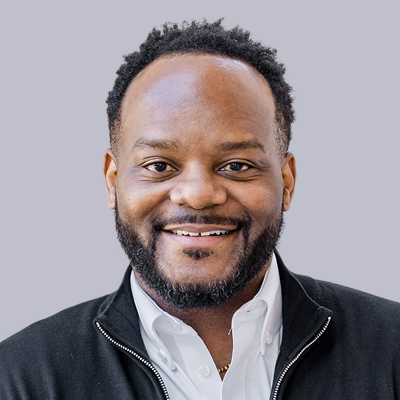
Marvin McLain
A healthcare professional with experience focused on health technology, electronic health records, performance measurement, process improvement, grant management, operations support, and strategic planning in both the private and public sector. Also versed in problem solving and analysis; managing patient assistance programs; and researching complex pharmaceutical reimbursement insurer trends, specifically related to Medicare, Medicaid and private insurance. Demonstrated strengths include leveraging technology to better serve clients, project management, matrix monitoring, and decision making.

Remy DeCausemaker
Open Source Lead for the Digital Service at the Centers for Medicare & Medicaid Services (CMS.) He helps developers, designers, and other contributors work with civil servants to create open accessible healthcare technology projects, programs, and policy.
Day 2 Panel - Code at Scale: Trust, Quality, and Sustainability in AI-Era Open Source

Alex Miller
Alex Miller is a Data Scientist for the Maryland State Innovation Team within the Office of Governor Wes Moore, focusing on leveraging open-source software and generative AI to build bespoke civic infrastructure. He is the creator of Legi-Assist, an open-source Python toolkit for legislative tracking that was recognized on Apolitical's "50 States, 50 Breakthroughs" list. His recent work also includes prototyping autonomous AI agents to remediate digital accessibility barriers across government websites, and developing open-source evaluation benchmarks to test the efficacy of transcription tools for the diversity of languages spoken in Maryland. Prior to joining state government, Alex worked in the field of international development, where he served as a Python developer for the International Aid Transparency Initiative (IATI).

Dr. Will Barnes

Dmitry Sagalovskiy
Dmitry Sagalovskiy is co-founder and Co-CEO of Grist Labs, which makes an open-source spreadsheet-database platform. He previously co-founded Hudson River Trading, a high-frequency trading firm, and New York Math Circle, a math enrichment nonprofit — and has taught math and computer science along the way. He thinks and writes about the economics and sustainability of open-source software, including the thorny question of how to build quality open-source end-user tools in a world where the incentives don't always cooperate. He holds a BA in Mathematics and MS in Computer Science from Harvard.

Jake Diamond Reivich